




Your doctor’s office: biology matters more than ideology
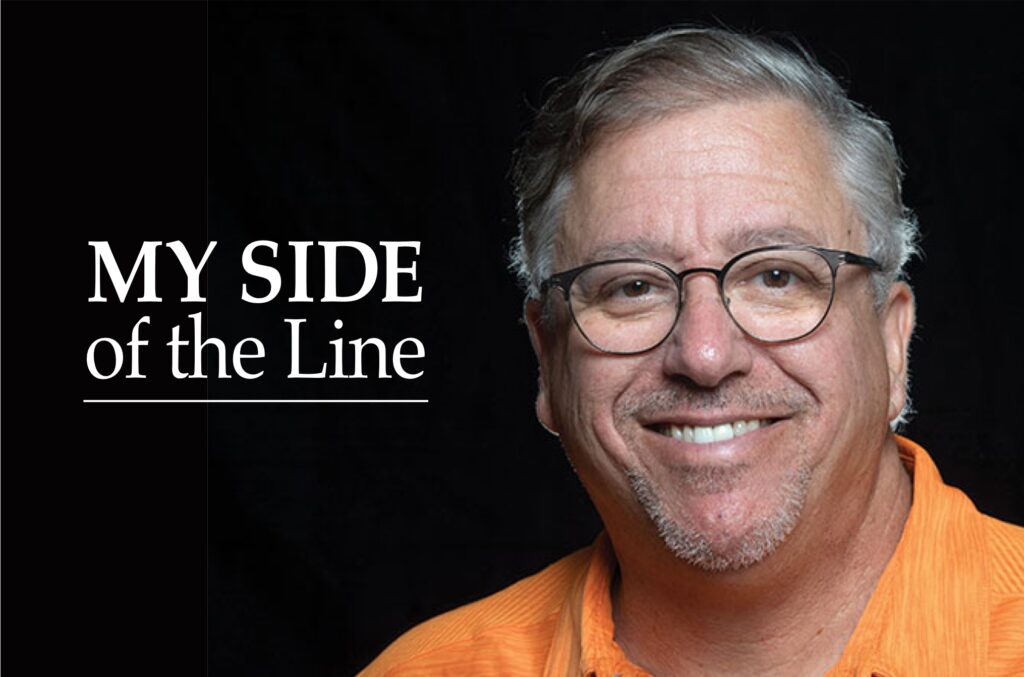
by Alex McDonald | Special to the Courier
Let me tell you what happens in the exam room.
A person — someone’s mother, father, child, neighbor — sits on a papercovered table under fluorescent light and trusts a stranger with the most intimate details of their life. They describe their pain, their fears, their habits, and their secrets. That trust is not freely given; it is earned slowly, across visits, phone calls, and hard conversations. It is the foundation of every diagnosis, every treatment plan, every medical decision.
And right now that foundation is cracking — not from within medicine, but from outside forces that have decided the exam room is fair territory for ideology.
I have been a family physician for more than 15 years, and I direct a residency program, which means I help train the next generation of doctors. These are young physicians who entered medicine for the same reason people have always become healers: to relieve suffering. What I am watching happen to our profession, our patients, and our communities troubles me deeply.
This is not a political essay. It is a clinical one. The U.S. health care system is deeply broken, and many people rightly seek answers beyond it. But regardless of where patients receive care, the sanctity of the physician-patient relationship matters. Politics and ideology do not belong in the exam room. The politicization of medicine is a public health crisis, and it is time we name it as such.
Politics has entered the clinic — without an appointment
Health has become political whether we want it to or not. Vaccines — among the greatest achievements in medical history — are now tied to party identity. Dietary guidelines spark congressional hearings. Mental health care is legislated by people who have never treated psychosis. Pediatric care and reproductive medicine are culturewar battlegrounds, with laws written absent the clinicians who must abide by them.
To be clear: health policy belongs in democratic debate. Funding, insurance design, public health infrastructure — these are legitimate political discussions. What I am describing is something far more dangerous: the intrusion of partisan ideology into clinical care itself, into what I can say to a patient, what a patient is willing to hear, and what evidence is considered trustworthy.
When a patient looks at me with suspicion because of something they saw on television or social media that is not a policy disagreement; it is the erosion of the therapeutic relationship, and it has real consequences.
Becoming a physician requires decades of training, enormous sacrifice, and often crushing debt. No one chooses this path to deceive patients or get rich. There are far easier ways to do that. The idea that doctors are agents in a vast conspiracy is both false and profoundly harmful.
The myth of the corrupt physician
A narrative has taken hold in parts of our media and political culture: physicians as either pawns of a corrupt system or active conspirators against their own patients. This story collapses under even minimal scrutiny.
Physicians complete years of education and up to a decade of training, often working 80-hour weeks for modest pay. Many delay families, financial stability, and personal milestones. We are closely regulated, continually evaluated, and legally vulnerable. And we do this — overwhelmingly — because we want to help people.
Yes, the system is broken. Pharmaceutical pricing can be indefensible. Insurance companies interfere with care. Implicit bias causes real harm. Hospital and insurance leadership often prioritize profit over patients. These critiques are valid and urgent. But the leap from “the system has failed” to “your doctor is lying to you” is not logical. It is politically engineered distrust — and that distrust costs lives.
Burnout, moral injury, and physician suicide are already endemic. The current ideological assault only worsens them.
The rise of the health influencer
Into this distrust has stepped a new figure: the socialmedia health influencer.
Some of this shift reflects real failures. Physician shortages are worsening. Appointments are shorter. Electronic health records pull our attention from patients. People feel rushed, unheard, processed. Wanting to understand one’s health and participate actively in care is reasonable and healthy. Our system does not support this well.
But there is a critical difference between an informed patient and one who has replaced clinical guidance with a podcast host selling supplements.
Medicine is often misrepresented using the slogan “absence of evidence is not evidence of absence.” In clinical care, this idea is frequently misused. When highquality studies consistently show no benefit — or harm — that absence is itself meaningful. Treating uncertainty as infinite biases patients toward unnecessary tests, risky treatments, and lowvalue care.
When physicians dismiss questions without explanation, patients keep searching. Influencers exploit that gap with confidence, warmth, insider language — and often a storefront. Some advice is benign. Some is helpful. Some is dangerous. Most patients cannot reliably tell the difference, not because they are unintelligent, but because the ecosystem is designed to mimic credibility.
Why the evidence gaps exist
Some patient frustration is justified. There are areas where medicine has thin or missing evidence — nutrition, lifestyle, integrative care, patient experience. This is not always conspiracy. It is often economics.
Clinical research is expensive. Our funding model prioritizes what can be patented, branded, and sold. Diets and lifestyle interventions lack sponsors. Government funding for broad publicbenefit research has increasingly fallen victim to politics. These structural failures leave gaps that confident voices rush to fill.
Acknowledging this reality does not validate misinformation. It contextualizes it — a necessary step toward fixing it.
When politics practices medicine
The most alarming form of misinformation is the political directive. When elected officials issue guidance on vaccines, psychiatric medication, pediatric care, or infectious disease management, we have crossed a dangerous line.
Politicians fund health systems and shape policy. They do not practice medicine by press release.
When recommendations are driven by political calculation rather than evidence, patients suffer. They make decisions based on identity instead of data. They distrust effective treatments and pursue ineffective ones. Physicians are left to pick up the pieces and rebuild trust destroyed elsewhere.
We have seen the consequences: vaccinepreventable diseases reemerge, psychiatric illness left untreated, supplement and “peptide” harms, delayed cancer screening, avoidable hospitalizations. These are not abstractions. These are my patients.
Protecting the exam room
A patient who trusts their physician has not abandoned critical thinking. They have found someone honest about what is known and unknown, someone who respects them enough to tell hard truths and guide decisions with expertise and care.
That trust cannot survive a media environment that monetizes doubt. It cannot survive politicians who weaponize medical guidance. And it struggles to survive a health care system so strained that physicians lack time to earn it.
Rebuilding trust requires work from all sides. Physicians must communicate with humility and transparency. Health systems must support relational care. Patients must understand that highquality care is not an ondemand product. Researchers must address evidence gaps. Media must scrutinize health claims. And political leaders must learn to stay in their lane.
The exam room has long been a refuge — a place where biology matters more than ideology. We owe it to our patients, and to each other, to fight to keep it that way.
Alex McDonald, MD, CAQSM, FAAFP, a family and sports medicine physician and president of Claremont Unified School District’s Board of Education, has lived and served in Claremont for more than a decade.

0 Comments