


Viewpoint: Take precautions, as unhealthy air will return July 4
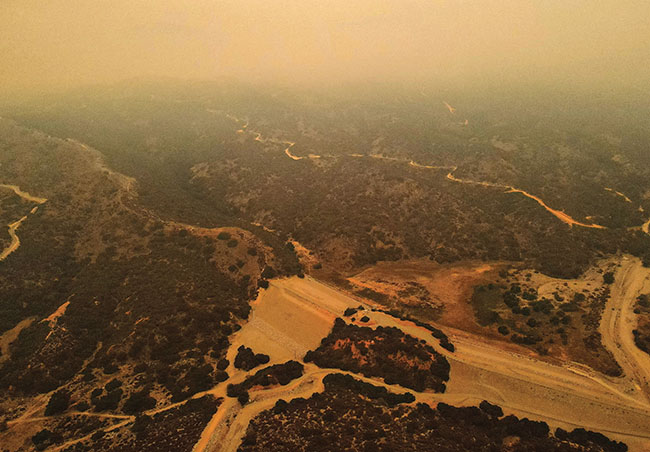
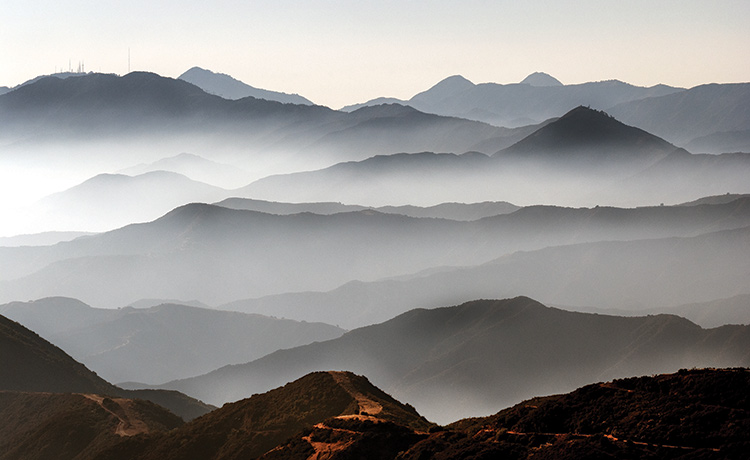
Smoke from the Bobcat Fire blankets Claremont Hills Wilderness Park in September 2020. Courier photo/Peter Weinberger
by Julie Medero and Lelia Hawkins | Special to the Courier
Don’t put your N95 masks and HEPA air cleaners away just yet. Claremont residents will need these protective measures for the Fourth of July weekend. After a week of relief from the smoke impacts of a Lineage fire in Boyle Heights, we’d like to remind our community of the harmful air pollution generated by regional fireworks shows.
The Palos Fire at the Lineage Logistics warehouse began on June 17 and flared up significantly on June 19. By that evening, smoke reached Claremont, and fine particle concentrations (PM2.5) soared. Claremont was downwind of the fire overnight due to seasonal wind patterns and our mountain foothill topography, though air quality alerts stretched from the San Fernando Valley to Rancho Cucamonga.
Exposure to PM2.5 is associated with acute and long-term health impacts. Air quality advisories for wildfires and major structure fires remind residents to stay indoors, limit physical activity, wear an N95 mask, and run an air purifier or home HVAC system to reduce indoor PM levels. Sensitive groups are urged to take extra precautions.
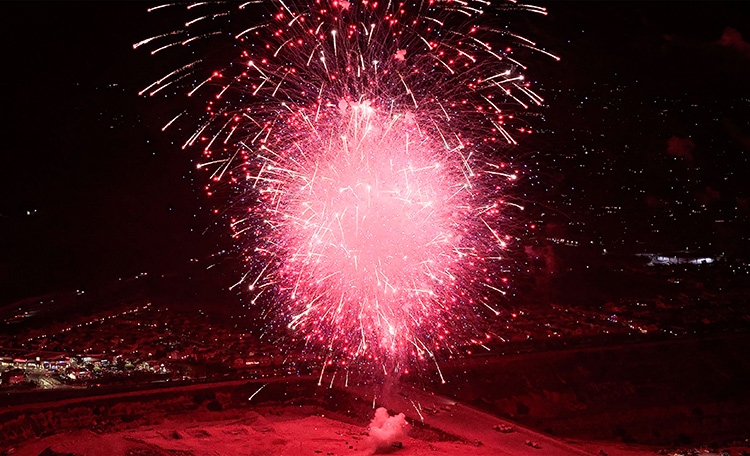
Those fires are not predictable. However, this weekend Americans will yet again be exposed to hazardous levels of PM2.5 in honor of our nation’s 250th birthday. Claremont residents should plan ahead for poor conditions on July 5. Claremont, La Verne, and Upland are all planning separate fireworks shows, which will elevate hazardous PM before midnight in Claremont. Then, the regional PM impacts will waft into our area and remain for much of July 5, if typical weather patterns prevail.
Our team sees the same pattern every Fourth of July. Together, we run the Lab for Investigations of Local Air Quality at Harvey Mudd College. We operate a range of air pollution monitors, including a fleet of publicly accessible PurpleAir sensors. Each year, we see PM levels spike thanks to the same winds that brought us smoke from Boyle Heights. Those winds collect fireworks smoke from across the region and deliver it directly to our front doors.
PM levels will likely be similar to those generated by last week’s massive structure fire, but the health risks may be worse. Rather than the neighborhood-scale pockets that were momentarily downwind of the warehouse fire, the entire basin will experience unhealthy levels of PM2.5, exposing far more people. Worse, the particulates generated by fireworks contain rare metals, such as arsenic, strontium, copper, barium, magnesium, titanium, and aluminum, along with plenty of potassium nitrate, charcoal, and sulfur for combustion. In some national studies, elevated lead levels have been observed. We don’t yet know the concentration of metals from the warehouse fire.
What should you do? We recommend you take the same precautions you would take when structure fire or wildfire smoke was the concern: stay indoors, run air purifying filters or your HVAC system, limit strenuous activity, and/or leave town. Essentially, plan to limit your own exposure. If you own a box fan and have HVAC filters lying around, you can make an air filter that works as well as commercial units.
Predictability means we have the opportunity to plan for the poor conditions. It also gives us a chance to improve things in the future. In addition to air quality impacts, fireworks require large amounts of water, frighten pets, and impact many individuals with PTSD.
Following devastating wildfires, local communities including Pasadena, Culver City, Arcadia, and LA will celebrate with drone light shows this year. As more and more municipalities opt for pairing concerts with drone light shows, and as the negative health effects of PM become even more clear, does it still make sense to fill the skies with red, white, and … copper?
Yes, fireworks are a beloved tradition that combines visually stunning explosions with awe-inspiring booms, and drone shows are significantly more expensive than fireworks. But calls to embrace alternatives resurface annually, even as some celebrations expand to record-setting levels. In 2022, facing water restrictions, Claremont hosted a concert, before returning to fireworks. We invite creative ideas for the best way to celebrate future Fourth of Julys in Claremont and across the U.S. Most immediately, be sure to plan ahead and limit your exposure to this year’s PM-heavy aftermath.
Julie Medero is the Csilla and Walt Foley Professor and Chair of Computer Science at Harvey Mudd College. Lelia Hawkins is the Hixon Professor of Climate Studies and Chemistry at Harvey Mudd.
Related

0 Comments