




Viewpoint: Demystifying sustainability — making full electrification possible
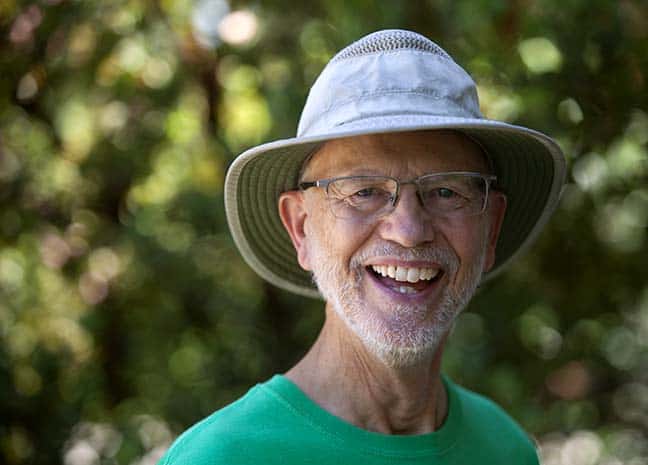
Char Miller is the W.M. Keck Professor of Environmental Analysis and History at Pomona College. Courier file photo
by Char Miller | Special to the Courier
Local sustainability dialogs have contributed significantly to our public conversations about creating a healthier, greener, and more resilient community. This ambition characterizes each of the estimated 100 dialogs that have occurred since 2009 under the aegis of the host organization, Sustainable Claremont.
Launched in March 2009, the first three dialogs set an ambitious agenda. The first one, amid a national economic downturn, offered a pathway for Claremont to become more self-sustaining, a transition that would require concerted effort to rethink energy consumption and increase recycling of waste, among other changes at the city and residential levels.
One of those transformations was the subject of the second dialog — “Local California Native Plants for Sustainable Gardens” — which had (and has) the virtue of offering us an immediate and small-scale action that would beautify our yards and shrink our carbon and water footprints (and not incidentally, reduce the whine of mower and blower).
The third event took a somewhat more macro approach. It featured representatives from Three Valleys Municipal Water District addressing “Claremont’s Water Future,” a future that continues to be bound up with the state’s water delivery infrastructure and the ongoing, climate-disrupted, and shifting patterns of precipitation.
The striking thing about this trio of topics is how prescient they were and relevant they remain. Scrolling through the archive of the past 17 years of dialogs reinforces this point. Energy efficiency and retrofitting, landscape restoration, reducing water use, like others devoted to “building a green Claremont” (April 2010), environmental justice (February 2011), urban agriculture (April 2012), and climate change’s local manifestations (with at least one presentation a year), have offered a provocative and rich educational experience. Oh, and you’ll not be surprised that there have been numerous Sustainable dialogs heralding the arboreal in this City of Trees.
So, if you want to geek out, go to sustainableclaremont.org, click on the Resources tab, then on the dialogs page. What unfolds is the remarkable depth of our collective discussions about planetary issues as we encounter them at the local level. Manifest as well is the consistent attention paid to next steps that are hands-on, pragmatic, and possible (and which often are eligible for rebates — a great incentive).
This year’s dialogs, which will begin on April 9, reaffirm this longstanding commitment to increasing the community’s sustainability, broadly conceived. The first will take advantage of and respond to the opportunities offered when in early 2019 Claremont committed to sourcing its energy from the Clean Power Alliance. Prior to that date, it was almost impossible to imagine how this community, or any other, could make a large-scale transition to renewable energy and away from fossil fuel generated energy. Yet as Richard Haskell and Sorrel Stielstra noted in the Courier in January 2022 [“Demystifying Sustainability: Greening Claremont’s electricity”], the “switch to renewable energy sources in generating 45 million kWh of Claremont’s electrical energy each year is equivalent to eliminating the GHG emissions of 6,900 gasoline-powered passenger vehicles for one year.” Two years later, we were erasing GHG emissions of 9,765 gasoline-powered passenger vehicles. Claremont is on a roll.
Today, the data indicates city residents have accelerated their commitment to 100% green energy. This is great news, and its ramifications will be explored in a quartet of “full-electrification dialogs.” Each will be designed to help Claremonters make the transition to full electrification in four affordable steps. Each will sharply decrease the amount of fossil gas used to power our household systems and appliances. And each switch-out can be undertaken over several years if needed. The four steps (and thus four dialogs) involve installing heat pumps for HVAC, water heaters, and clothes dryers; and replacing gas cooktops with induction or other electric stoves. As always, the dialog speakers will provide clear guidance so that we better understand the replacement technology, and they will identify competent and certified installers, and highlight where to locate and obtain rebates that will substantially lower the expense of the transition.
So, join us at 7 p.m. Thursday, April 9 in Pomona College’s Hahn Auditorium, 420 Harvard Ave., as we begin yet another compelling series of free and open to the public sustainability dialogs.
Char Miller is on the board of Sustainable Claremont and the W.M. Keck Professor of Environmental Analysis and History at Pomona College.
Related





0 Comments